
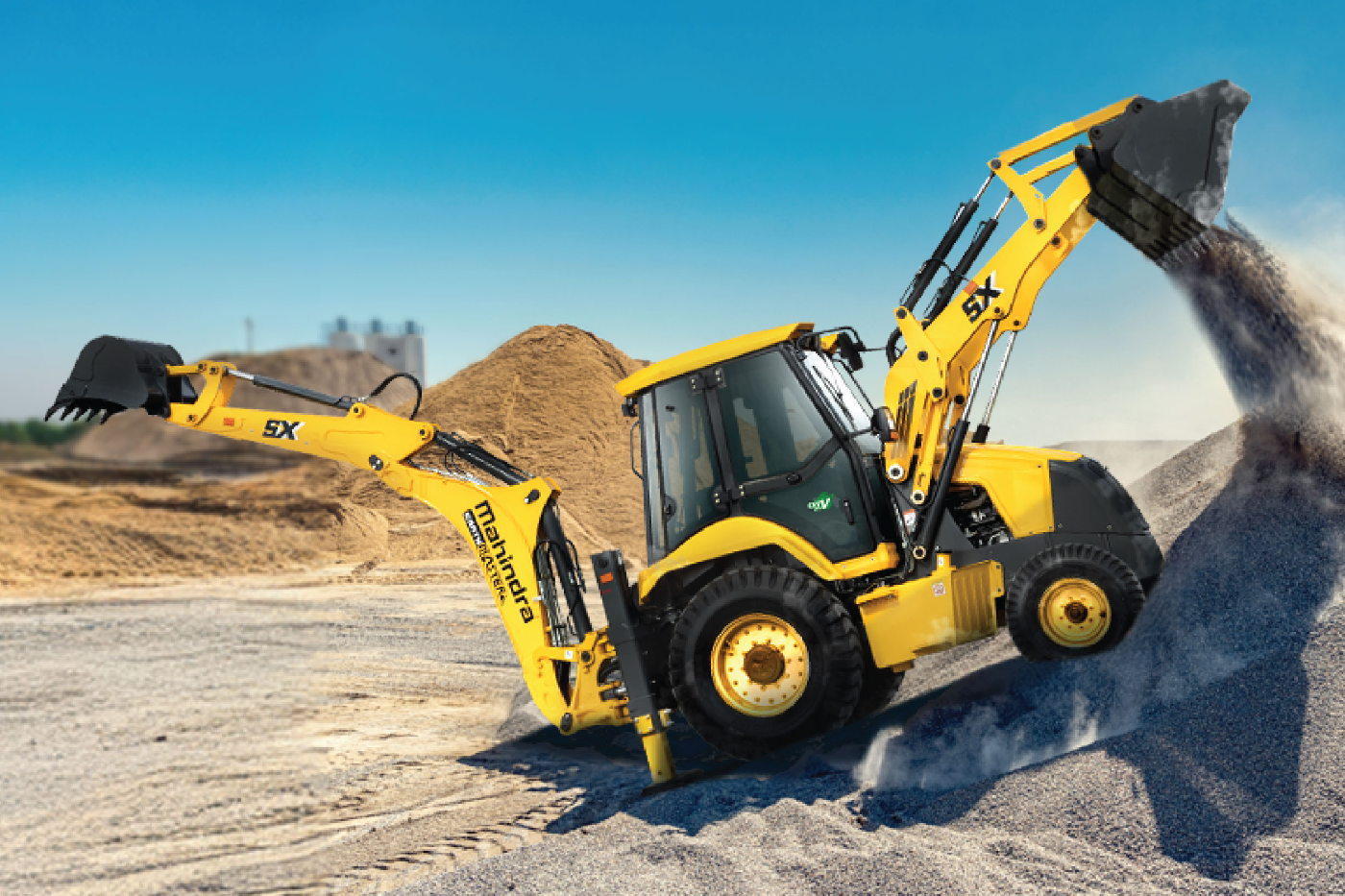
Out of all the three, backhoe is the main component of the Backhoe Loader (BHL) and is used to dig up hard and compact material, usually earth or to lift heavy loads. This backhoe again constitutes three segments i.e., boom, stick and bucket. The backhoe can dig all sorts of holes but is especially suited for digging ditches.
In this task of digging ditches, penetrating and breaking of compacted dirt and rock, the bucket teeth provide an edge to the backhoe bucket. They are fitted into the corresponding slots on the bucket and are held firm with the pins.
Why backhoe bucket teeth need to be replaced often?
Given the heavy tasks they perform, the bucket teeth are subjected to high wear and tear. Thus, they are designed in such a manner that they can be easily and inexpensively replaced. In many cases, there are tooth bars instead of individual teeth in the bucket. In these types of equipment, the entire tooth bar has to be removed for replacing the teeth.
Things needed to replace backhoe bucket teeth
- New bucket teeth
- Keeper pins
- Wire bristle brush
- Sledge hammer
- Keeper-pin punch
Steps to replace the backhoe bucket teeth
1. Set up the equipment
• Keeping the teeth parallel to the ground, position the bucket using jack stand or wooden blocking for support. Any potential pinching or crushing accidents can be averted through this simple step.
2. Remove the worn out teeth
- Use a wire bristle brush to remove the excess dirt from the tooth shank and mounting bolt.
- Using the sledge hammer and the keeper-pin punch to tap out the tooth keeper pin.
- Now the worn out tooth can be removed from the tooth shank. If it does not come out easily, tap it with the sledge hammer.
- If any more dirt in the tooth shank, remove it using the wire bristle brush.
- Inspect the tooth shank carefully to find out the signs of excess wear or damage such as cracks, if any. The tooth shank should be replaced if it is needed.
3. Place the new teeth
- The new tooth should be slided onto the tooth shank until the pinholes align.
- Using the sledge hammer and the keeper-pin punch, tap the keeper-pin in place.
- By giving a few gentle taps with the sledge hammer, ensure that the new tooth is mounted securely. If the new tooth does not move from its place, it means that it is installed correctly.
General tips
- Protective equipment like safety glasses and safety-toed boots should be used while replacing the backhoe bucket teeth.
- Remember to set the parking brakes and turn off the loader without fail.
- Always, keep the ignition key with you till the bucket teeth are replaced so as to prevent anyone from accidentally starting the machine while the work is going on.
- Be very careful while removing the tooth to prevent it from falling onto your legs and feet.
In this way, you can successfully replace backhoe bucket teeth on your own without calling for any professional help.